 AI-First Culture
Time and Materials Contract in Construction Explained (With Real Examples)

Construction Projects Rarely Go Exactly as Planned
Construction projects rarely go exactly as planned. Design changes, supply chain delays, and unexpected site conditions can quickly alter project scope and cost.
That’s why contractors and project owners rely on different construction contract types to allocate risk and manage payment structures. One of the most flexible options is the time and materials contract in construction.
A time and materials (T&M) contract allows contractors to bill clients based on the actual labor hours, materials used, and equipment costs, rather than a fixed project price.
This approach works particularly well when the scope of work is unclear or likely to change during the project.
In this guide, we’ll cover:
What is a time and materials contract
A real-time and materials contract example
Key components of a T&M contract construction agreement
Time and materials vs fixed price contract comparison
Best practices for contractors and project owners
What Is a Time and Materials Contract?
A time and materials contract is a construction agreement where the project owner pays the contractor based on:
Labor hours worked
Cost of materials used
Equipment costs
Contractor markup
Unlike fixed-price agreements, the final project cost is not predetermined. Instead, the contractor invoices the client periodically based on actual work performed.
This model is often used when the project's scope is evolving; design plans are incomplete, or unexpected site conditions may arise.
Because the cost is tied directly to work performed, T&M contract construction agreements provide greater flexibility for both contractors and owners.
Key Components of a Time and Materials Contract
A well-structured time and materials contract in construction typically includes several important elements.
1. Labor Rates
The contract defines hourly labor rates for each role involved in the project, such as:
Project managers
Engineers
Skilled trades
Laborers
These rates often include wages, overhead, and profit margins.
2. Material Costs and Markup
The contractor is reimbursed for materials used on the project.
Typical material markup ranges between 10% and 30%, covering procurement, transportation, and administrative costs.
3. Equipment Costs
Construction equipment used on the project may be billed based on:
Hourly equipment usage
Rental costs
Operating costs
4. Not-to-Exceed Clause
Many T&M agreements include a maximum spending limit known as a Guaranteed Maximum Price (GMP).
This clause protects the owner by capping the total project cost while still allowing flexibility.
Time and Materials Contract Example
Let’s look at a simplified time and materials contract example.
Imagine a contractor hired to renovate a commercial office space where design details are still evolving.
Labor
| Role | Hourly Rate | Hours | Total |
|---|---|---|---|
| Electrician | $75 | $80 | $6000 |
| Carpenter | $65 | 100 | $6500 |
Materials
Wiring: $3,200
Fixtures: $1,800
Material markup (20%): $1,000
Total Project Cost:
$18,500
If additional work is required, the cost will increase based on extra labor hours and materials used.
While time and materials contracts offer flexibility, many construction projects still use fixed-price agreements. Understanding the difference between the two helps contractors choose the right approach for each project.
Time and Materials vs Fixed Price Contract
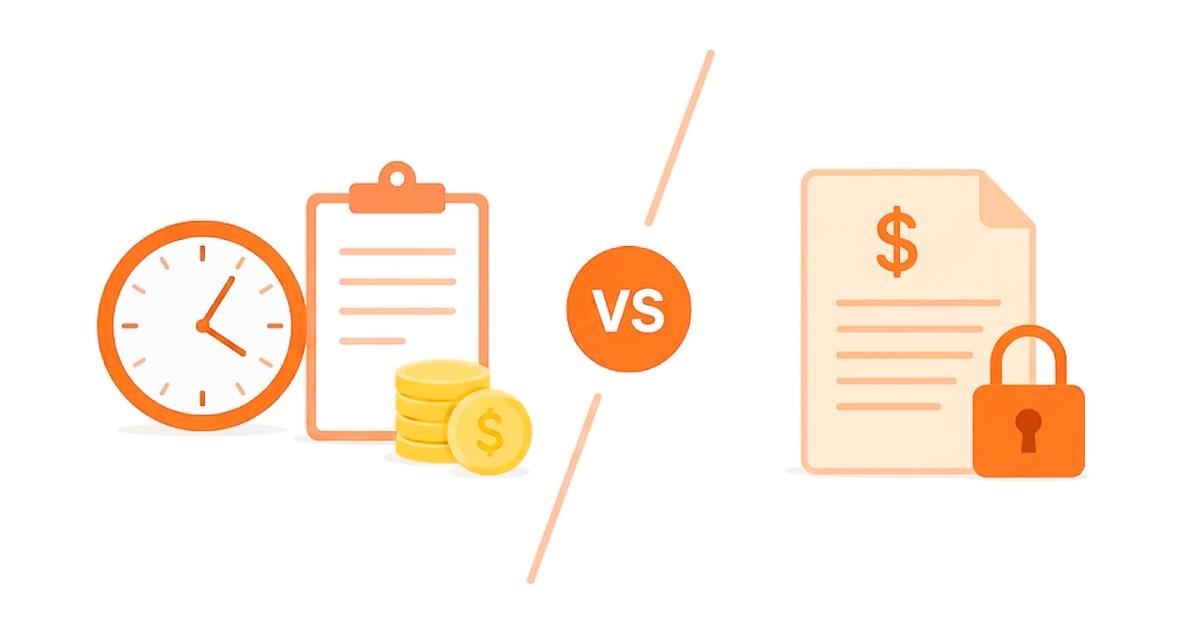
Here’s how time and materials vs. fixed price contracts compare in practice:
| Factor | Time & Material | Fixed price |
|---|---|---|
| Cost certainty | Low | High |
| Flexibility | High | Low |
| Risk | The owner carries more risk | The contractor carries more risk |
| Scope changes | Easy to accommodate | Requires change orders |
When project requirements are uncertain, T&M contracts provide flexibility that fixed pricing cannot offer.
What Makes Time & Material Contracts a Better Option?
1. Flexibility for Changing Scope
Projects with evolving design or unknown conditions benefit from T&M agreements.
This flexibility allows contractors to adjust work, materials, and schedules without renegotiating the entire contract.
2. Transparency in Costs
Owners see actual labor hours and material costs, making pricing more transparent.
Detailed cost breakdowns also help build trust between contractors and project owners.
3. Reduced Estimating Risk for Contractors
Contractors don’t need to inflate bids to cover unknown risks.
Instead, they can focus on completing the work efficiently while billing only for the resources actually used.
4. Faster Project Start
Work can begin even before final plans are completed.
This helps projects move forward quickly, especially when timelines are tight or design details are still evolving.
Disadvantages of T&M Contracts
Despite the flexibility, T&M contract construction agreements also carry risks.
1. Less Cost Predictability
The final project cost can increase if the project takes longer than expected.
2. Higher Owner Risk
The project owner carries most of the cost risk.
3. Requires Strong Cost Tracking
Every hour worked and every material purchase must be recorded accurately.
Quick Tips to Create a Win-Win Situation with Time & Material Contracts
To make time and materials contracts successful, contractors and project owners should follow a few best practices.
1. Define Labor Rates Clearly
Specify hourly rates for each role involved in the project. Clearly defining rates for supervisors, skilled trades, and laborers helps prevent confusion or disputes during invoicing.
2. Establish Spending Limits
Use a not-to-exceed clause to control budget risk. This ensures the project stays within a defined financial boundary while still allowing flexibility for scope adjustments.
3. Track Labor and Material Costs in Real Time
Accurate cost tracking helps avoid disputes and billing errors. Using digital tools or construction software can make it easier to monitor job costs and maintain detailed records.
4. Document All Scope Changes
Even with flexible contracts, documenting changes improves transparency. Written records of scope updates, approvals, and additional work help protect both contractors and project owners.
Why Construction Software Matters for T&M Contracts
Managing a time and materials contract in construction manually can quickly become complicated. Contractors need accurate tracking of labor hours, material costs, equipment usage, and job budgets to ensure proper billing and avoid disputes.
Modern construction ERP solutions help centralize this information and provide better visibility into project costs.
Solutions like ProjectPro built on Microsoft Dynamics 365 Business Central help contractors:
Track labor and material costs by job
Monitor project budgets in real time
Automate billing for T&M contracts
Maintain accurate cost records to reduce disputes
Final Thoughts
Handling time and materials contracts in construction without accurate cost tracking can quickly lead to billing errors, disputes, and shrinking profit margins.
With ProjectPro, contractors can track labor hours, material costs, and job profitability in real time, while automating billing for T&M contracts.
To see how ProjectPro helps contractors gain full control over time and materials projects, talk to an expert.
Frequently Asked Questions
1. What is a time and materials contract in construction?
2. When should you use a time and materials contract?
3. What is a time and materials contract example?
4. What is the difference between time and materials vs. a fixed price contract?
5. What are the main construction contract types?
Keep reading

MENA Real Estate Is Booming. So Why Are Agents Still Losing 98% of Their Leads?

AI-Powered Lead Management in UAE Real Estate: How PropSmartz Prevents Lead Leakage

Ransomware Up 41%: Why Construction Firms Must Upgrade to Cloud ERP & Copilot to Protect Financial Data
Ready to build smarter? Let's talk.
Our experts are ready to help you turn ideas into production-ready AI, cloud and digital solutions.
Get in touch →Let's Discuss Your Growth Strategy
Let's discuss how we can help you accelerate growth, improve efficiency, and drive real business outcomes.